
CEE #70
Last week, CAMRA hosted their annual Screening Scholarship Media Festival with the theme of portals, an experiment with crossing boundaries, shifting perceptions, and navigating between worlds. For the organizers, portals were “intersections where multiple realities, experiences, and dimensions converge,” and the projects that were highlighted over the two days of the festival blended material and metaphysical approaches to world/art-making across historical, spiritual, and technological terrains. The sun has finally broken through the chill of the never-ending winter – let us experience this as the portal to blooming, pollination, and eventually, summer!
CEE #69
I’m just back from LA where I had the pleasure of hanging out with colleagues at USC’s Society of Fellows, and where I also had the opportunity to see the “Monuments” exhibit, jointly presented by the Geffen Contemporary at MOCA and The Brick, co-curated by Hamza Walker, Bennett Simpson, and Kara Walker, with Hannah Burstein and Paula Kroll. The exhibit, which has been extensively covered across media, mixes decommissioned confederate monuments with the work of contemporary artists who are reconfiguring what memorialization, witnessing, and repair could look like.
CEE #68
Six more weeks of winter, and people have still not been able to dig out from last week’s snowstorm. I could embrace winter as long as it does not bring six more weeks of children being used as pawns, six more weeks of ICE killings, six more weeks of inflammatory and inaccurate proclamations, six more weeks of normalizing sexual violence, and six more weeks of intimidating people who gather to ask for governmental accountability.
CEE #67
The year 2026 marks the 250th anniversary of a sovereign United States, freed from the political economy of British colonialism, yet it nevertheless began with a U.S.-orchestrated coup against a sovereign nation in South America. We have long known that democracy is riddled with subtle complexities, as it were, yet this autocratic action is neither subtle nor complex, nor is it without historical precedent in both the near and distant past. Let us resolve in this new year to move toward compassion, selflessness, reflection, and actions grounded in study and dialogue. Let us create and strengthen the communities and practices we know create the conditions for thriving. And let us imagine worlds in which violence is not lurking around every corner, and in imagining them, bring them into being. A million welcomes to Daniel Tucker and Gabrielle Goliath, who will help us to dream big this semester!
Deborah A. Thomas
Director, CEE
CEE #66
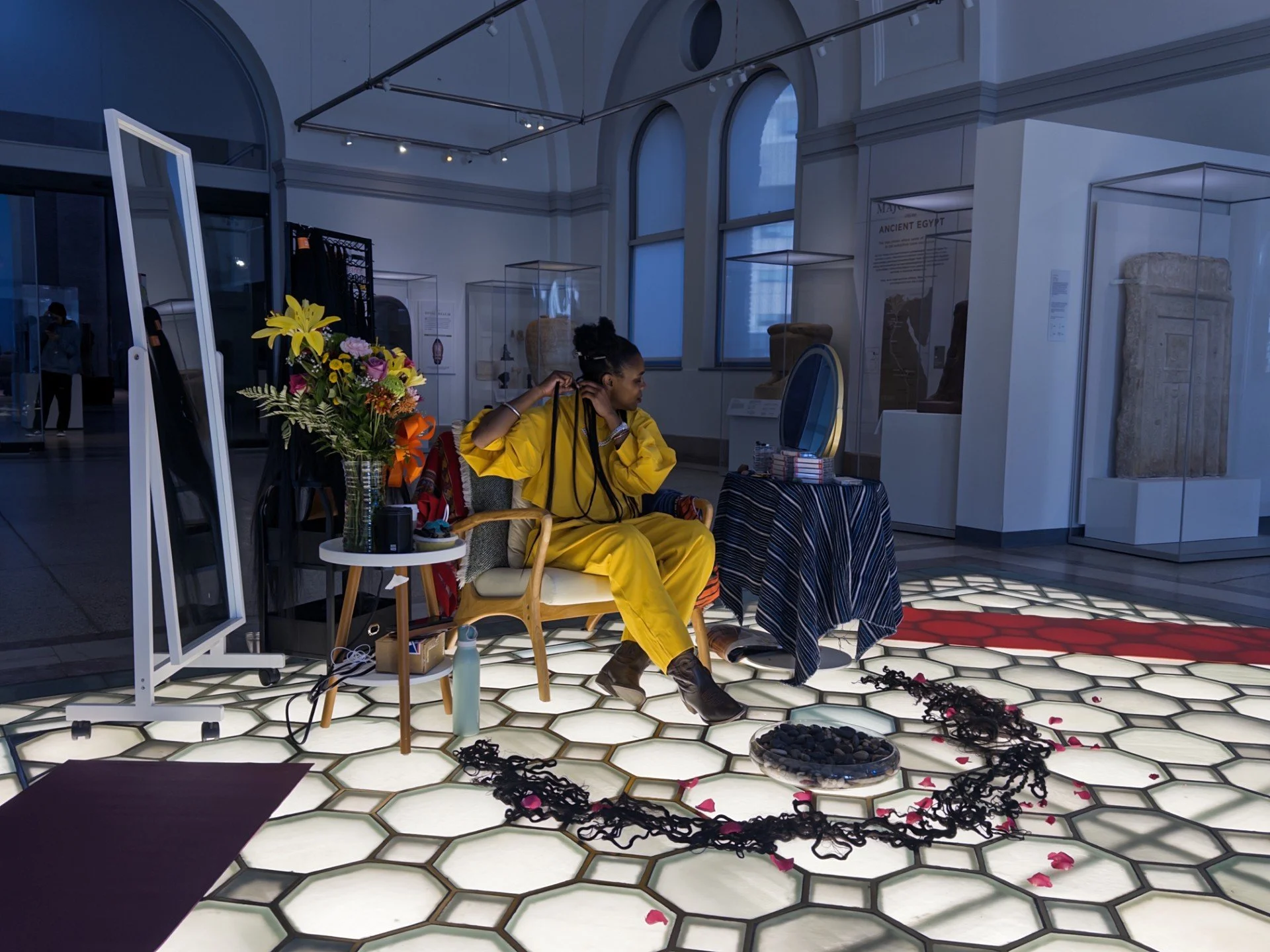
On this rainy and cold day,I want to register my gratefulness. I am thankful for the ability to share food with family and friends, and to be able to take a moment out of the hectic routines of life to remember, and to see in action (across generations!) how we will get through and get over. I am thankful for the opportunity to bear witness to our fall fellow, Courtney Morris, as she braided her own hair all day Saturday in the Pepper Gallery of the Penn Museum while mixed tapes played and people gathered to chat, draw, and expand her altar.
lookbooks
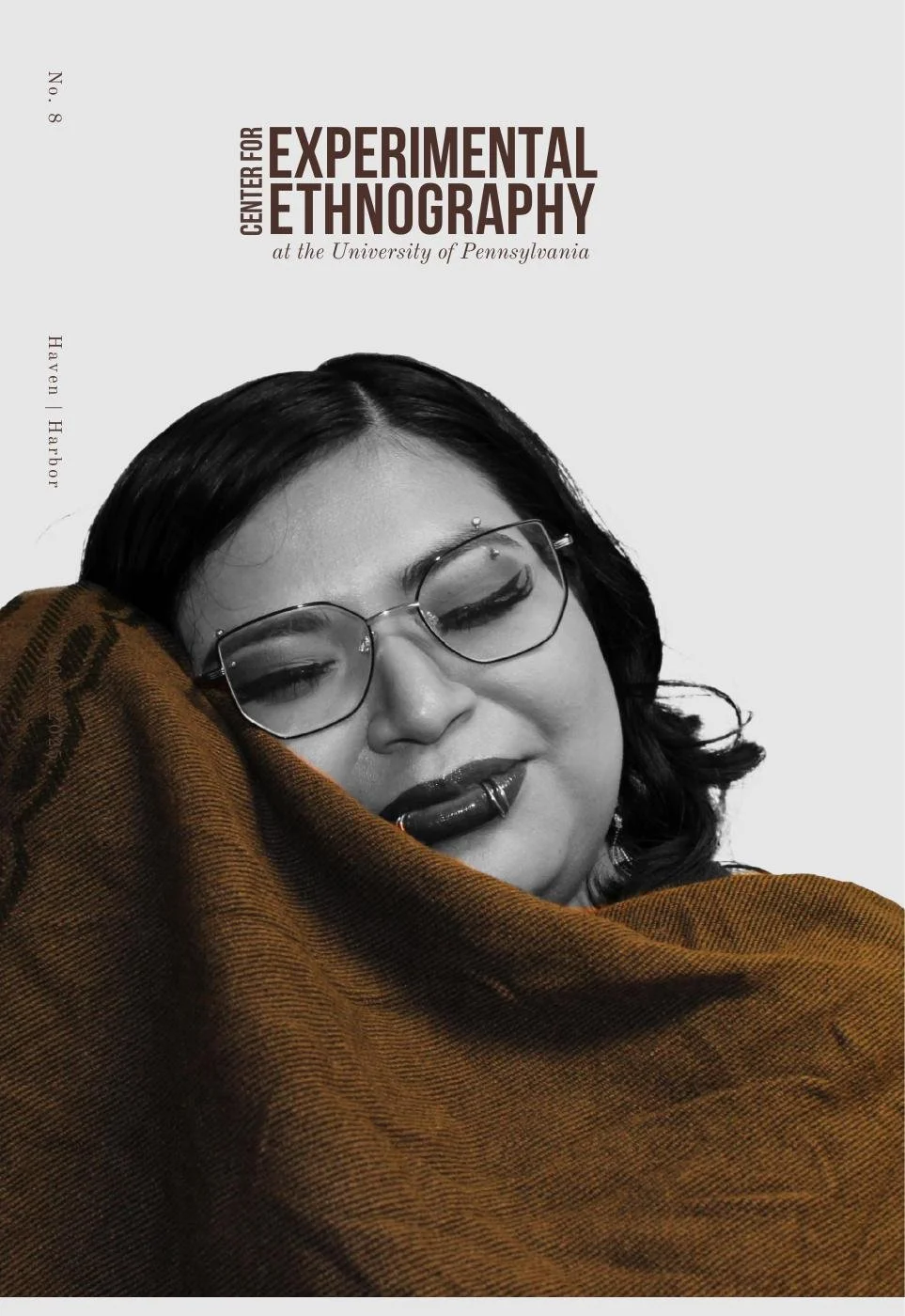
Every year, the Center for Experimental Ethnography publishes a creative lookbook; a visual archive of the year’s programming, courses, as well as student, staff, and faculty projects.
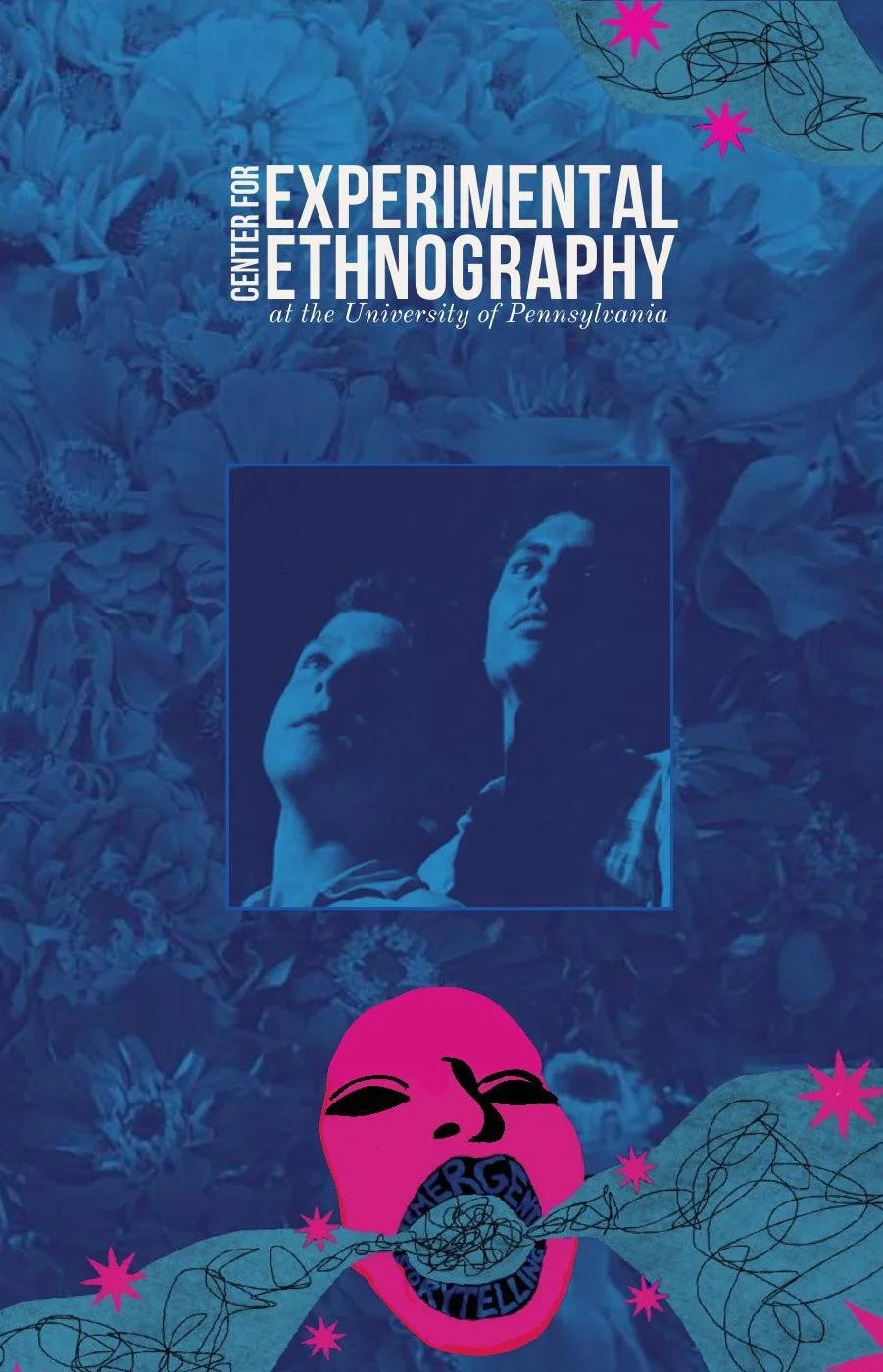
no 6. Emergent storytelling
August 2023-July 2024
no 7. haven | harbor
August 2024-July 2025
Read our latest lookbook by selecting the image above.
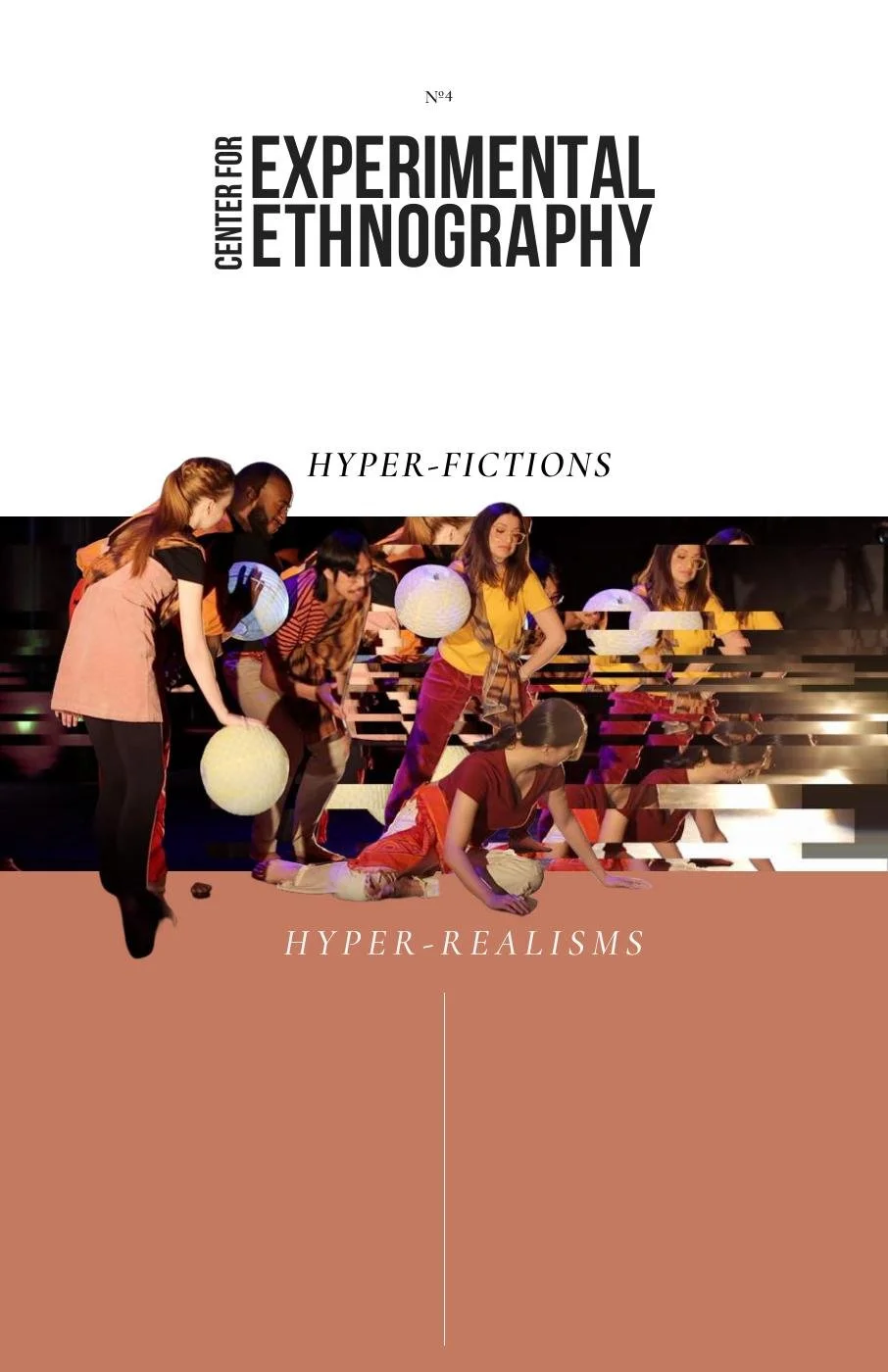
no 4. HYPER-FICTION/ HYPER-REALITIES
August 202-July 2022
We have been thrilled to be back“in person” for our CEE Fellows’ events, and for a few other things over this past year, under the theme of "Hyper-Fictions/Hyper-Reality." The CEE welcomed fivefellows this year: Ricardo Bracho,Cristiana Giordano and GregPierotti, Amitav Ghosh, and AliSethi. Each taught popular courses and developed extraordinarily successful final events, ranging from an experimental film screening and panel discussion on mental health in prison, a lecture-demonstration about "Affect Theatre," and a musical staged version of Amitav Ghosh's parable, Jungle-nama.
We also hosted or co-sponsored a number of events across campus, including the hybrid and extremely successful conference (co-sponsored by the Penn Museum)called “Settler Colonialism,Slavery, and the Problem ofDecolonizing Museums” (20-23October 2021); we hired AlissaJordan as our Associate Director; we welcomed three new affiliated faculty members; we awarded fifteen summer research grants to graduate students, and one to an undergrad; we awarded four new graduate certificates; we deepened partnerships withWXPN, PAFA and AAMP, and are building new ones with artists and institutions globally.
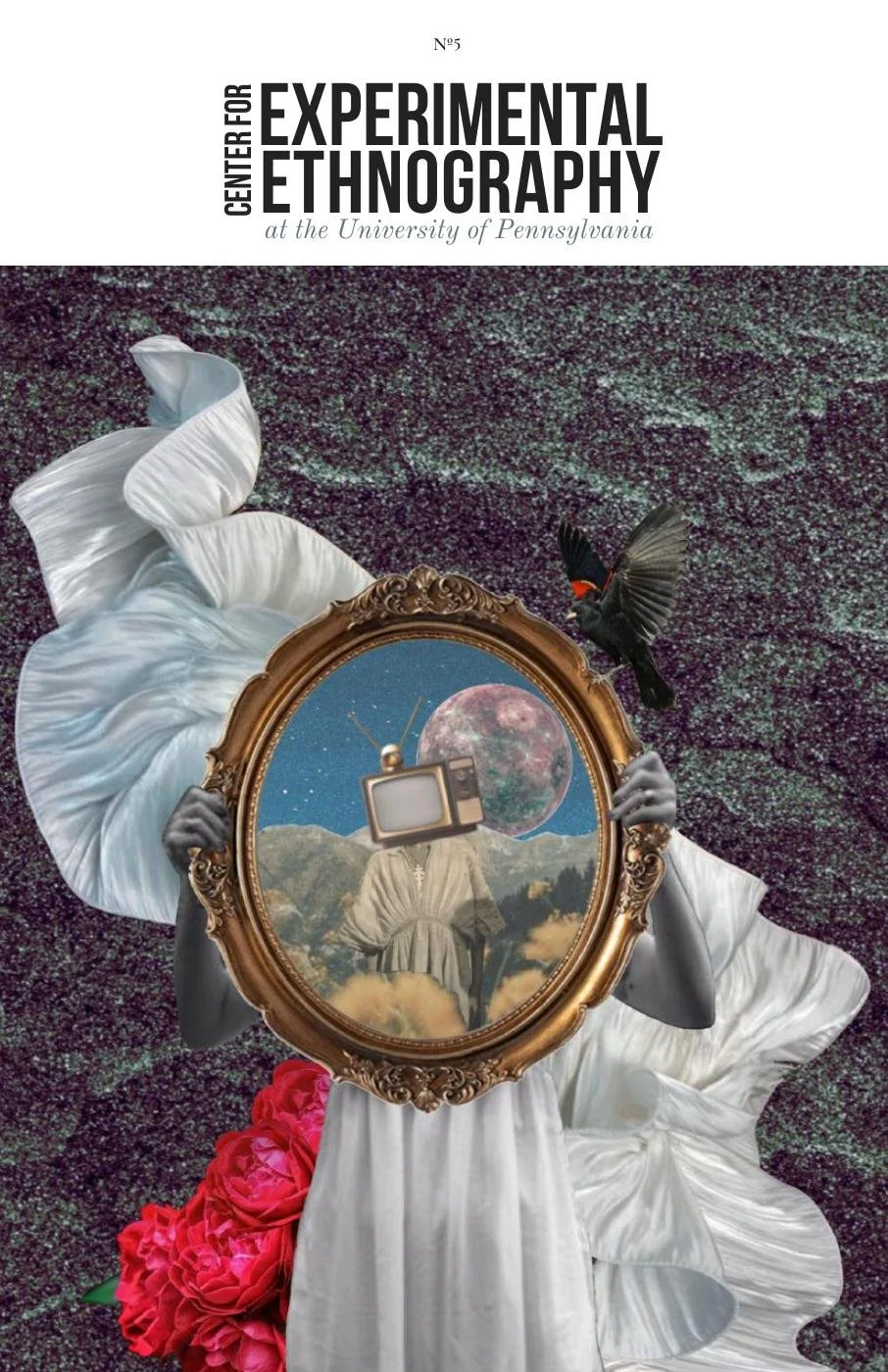
Our fifth year welcomed four fellows who taught highly successful classes, each of them opening space for students within their own practices. We also welcomed three new affiliated faculty members, and hired Jezenia Romero as our new Community Outreach and Administrative Fellow. We hosted and co-hosted a number of events and working groups designed to deepen our community in a variety of ways, including our fifth anniversary Carnival, for which we welcomed past fellows back to Philadelphia for over twelve hours of performances, screenings, discussions, soundings, and revelry. We awarded ten summer research grants to graduate students (and one post-doctoral fellow), and we graduated four students with the Certificate in Experimental Ethnography.
no 5. EMPATHIC THRESHOLDS
August 2022-July 2023
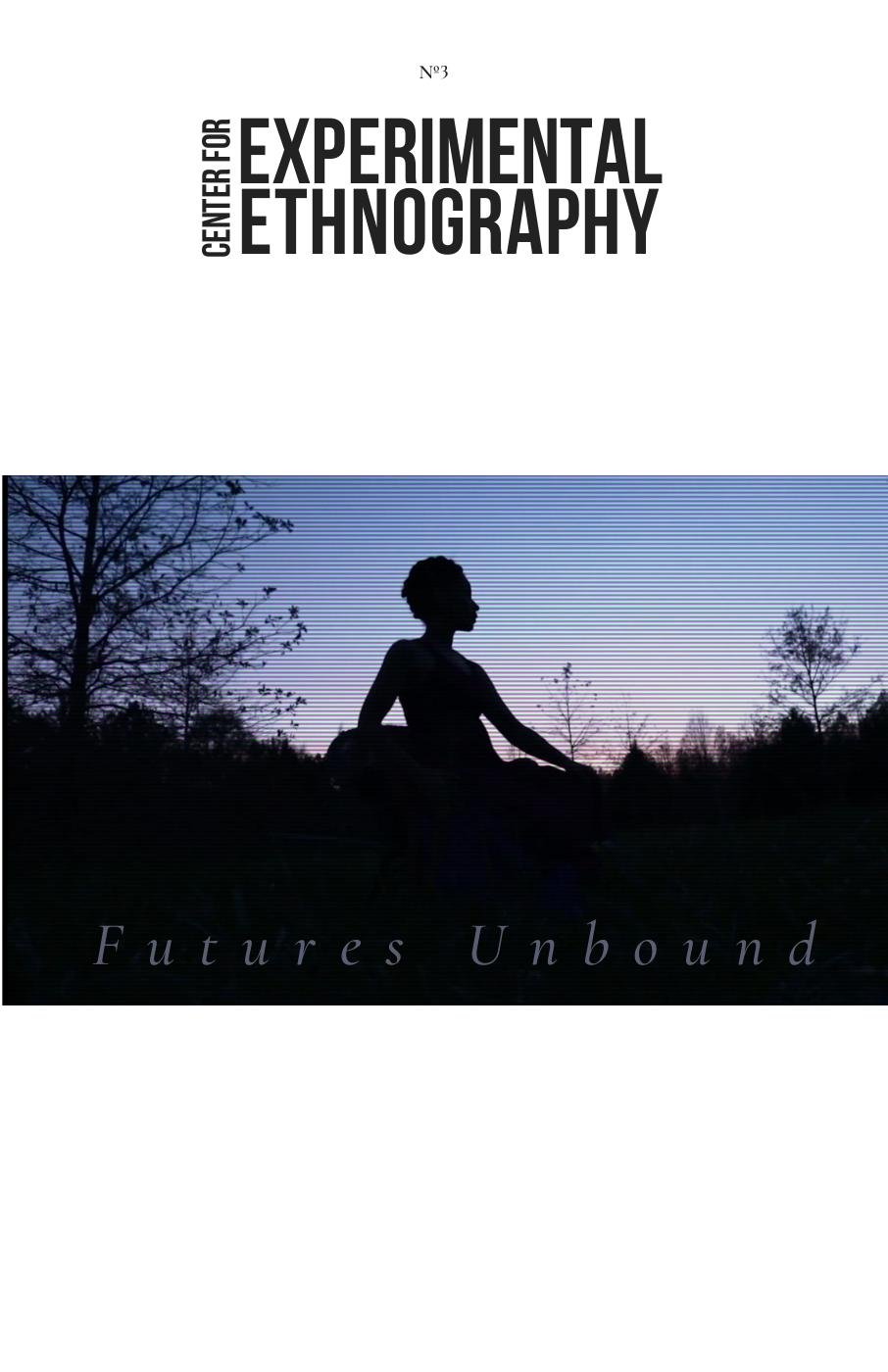
no 3. FUTURES UNBOUND
August 2020-July 2021
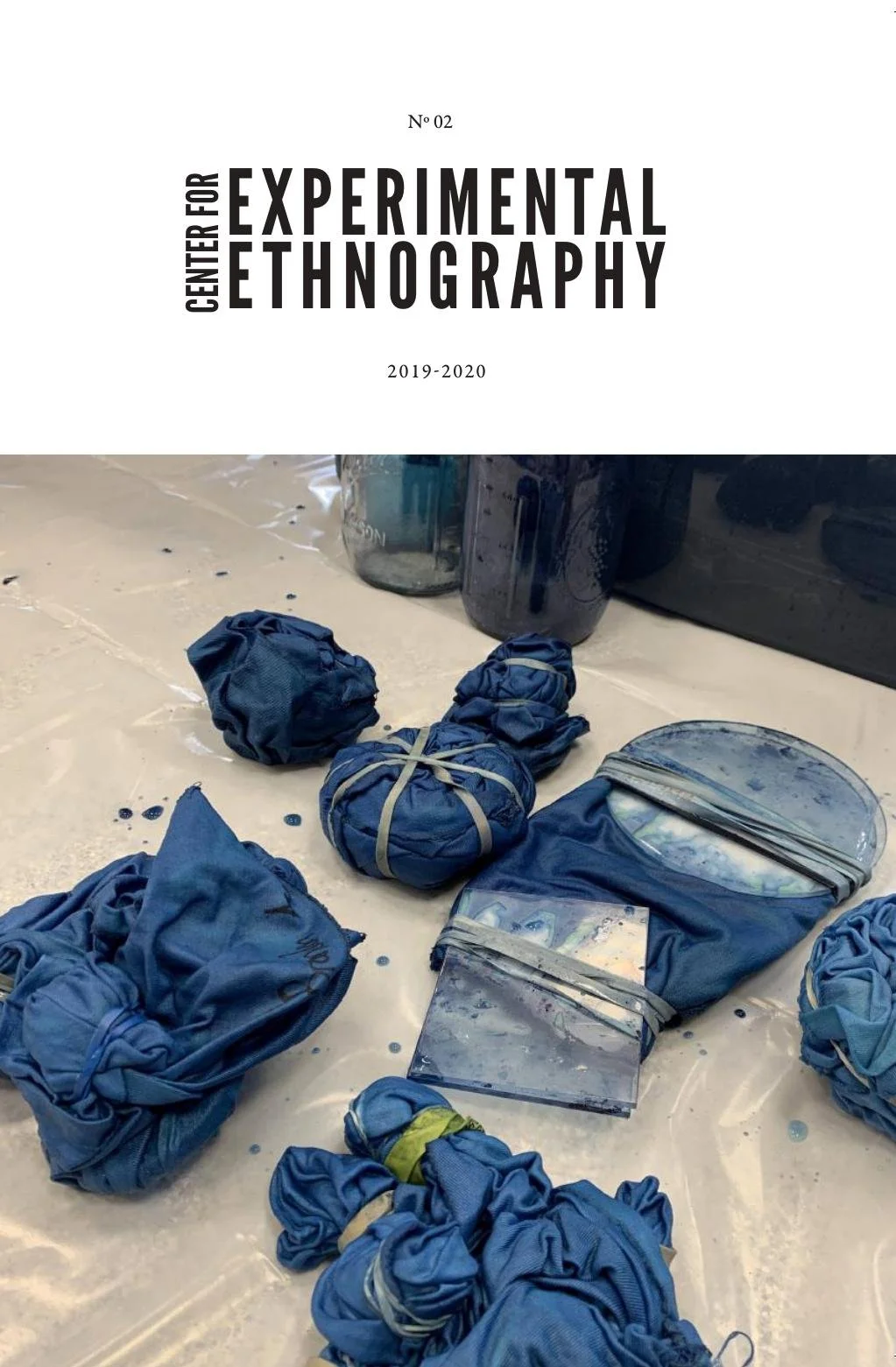
no 2. MEDIUM/ARCHIVE
August 2019-July 2020
Our second year in existence constituted another season of institution-building and community development. We hosted three fellows, all of whom taught immensely popular classes; sponsored and co-sponsored many events across campus with a range of partners; inaugurated a Third Thursdays works-in-progress lunch discussion series; funded fifteen graduate student summer research projects and fielded a number of requests for enrollment in our Graduate Certificate program; supported thirty undergraduate and graduate student projects by lending equipment; disbursed a course development grant ($5000); developed systems for archive management; continued to develop a new course to be offered for Penn Law, the Perelman School of Medicine, and the Stuart Weitzman School of Design students called “Experimental Ethnography for the Professions;” and drafted guidelines for the consideration and evaluation of creative research production within the tenure and promotion processes.
Despite having had to move everything to virtual fora, 2020-2021 was an exciting and generative year for the Center forExperimental Ethnography! We welcomed four fellows, populated their courses, and hosted their final events; we hosted or co-sponsored many very popular events (including a couple open discussions about MOVE, the PennMuseum, and PhysicalAnthropology); we hired a newAdministrative Associate andCommunity Liaison, and were approved to transform Alissa Jordan’s position from postdoctoral fellow to AssociateDirector; we launched an experimental ethnography course for professional school students; we awarded our first CEE GraduateCertificates; we funded 21graduate students for summer research or working group participation; we developed partnerships and collaborations with WXPN, PAFA, and the AfricanAmerican Museum of Philadelphia; and we continued to support each other through a challenging year!
Our inaugural year welcomed two fellows, Louis Messiah and Aimee Cox, under the theme "Working in Community." Louis Massiah, acclaimed for his documentary filmmaking and community engagement through the Scribe Video Center, led a course on non-fiction film's role in catalyzing social change, culminating in a screening of student-produced films. As part of his final event, Massiah screened his film-in-progress "The T.C.B. School of Organizing" which explored Toni Cade Bambara's life and approach to community organizing.
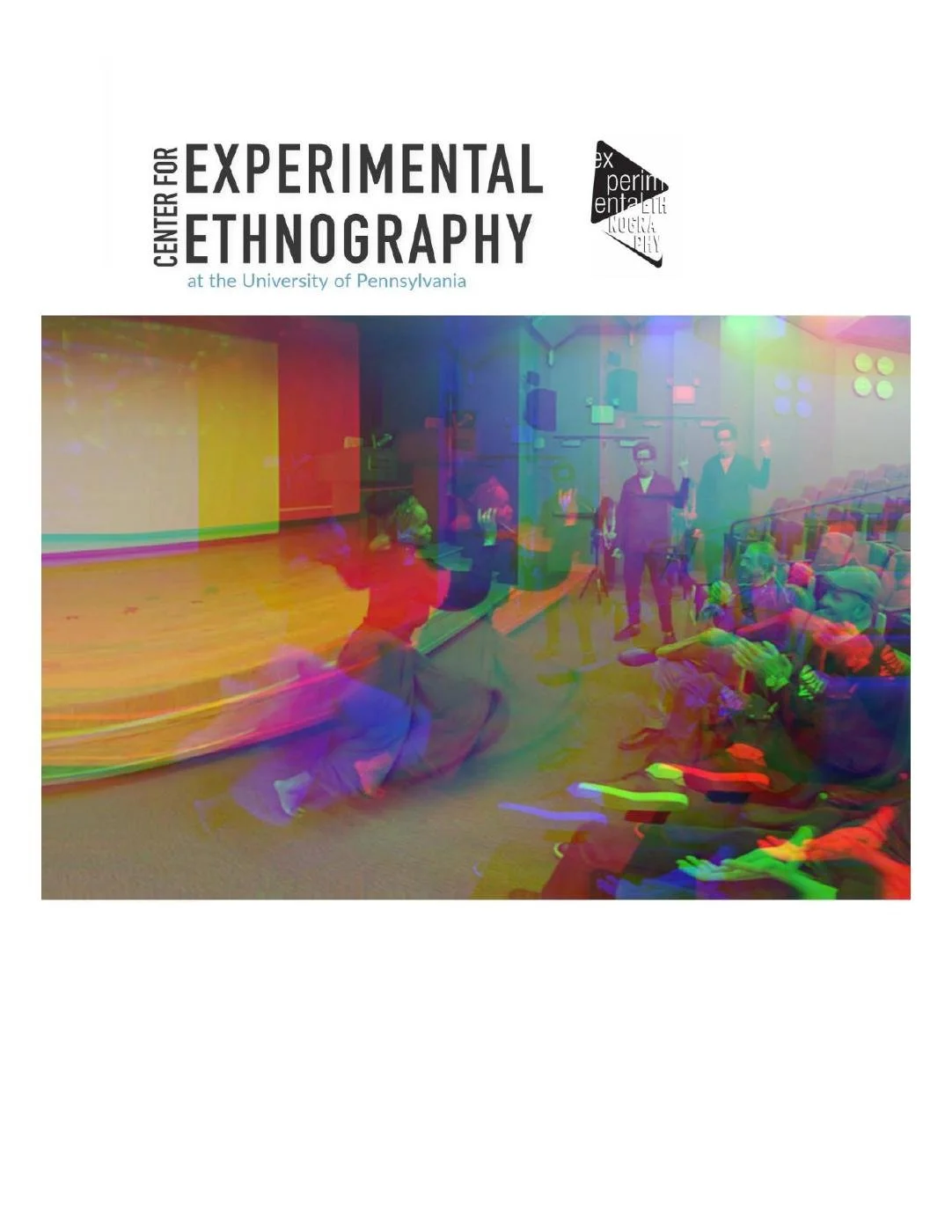
Aimee Cox, a dancer and an anthropologist, facilitated the "Black Women Moving" course, empowering students to challenge academic and creative norms and culminating in a powerful collective performance exploring space and identity. Her CAMRA workshop on embodied knowledge encouraged students to consider their relationships with space and bodies. Aimee's presentation at the Screening Scholarship Media Festival featured a participatory ritual performance, promoting discussions on improvisation, identity, and mobility...
no 1. WORKING IN COMMUNITY
August 2018-July 2019