
Currently Enrolling
Seeing Is Believing: The American Music Documentary
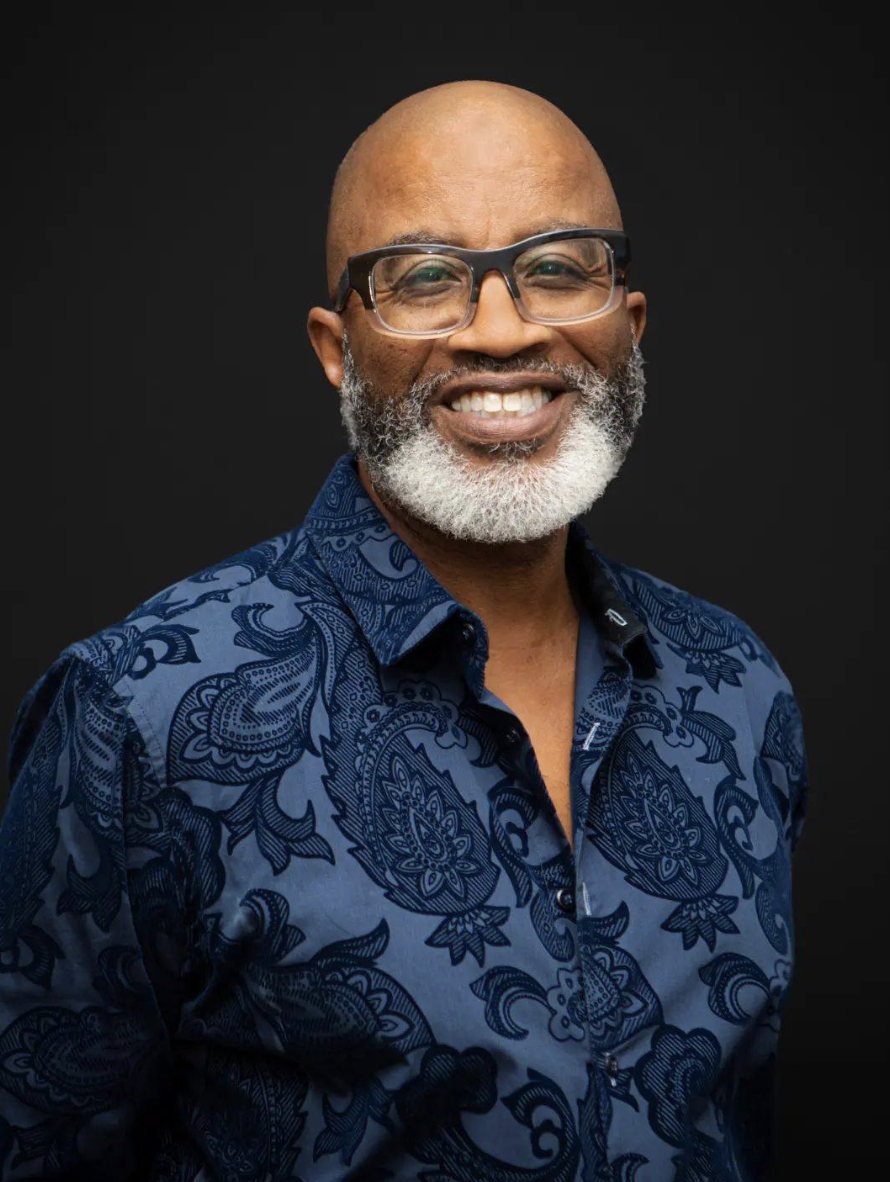
Dr. Guthrie Ramsey
Wednesdays 1:44-4:44
Lerner 210
ANTH 6676
This course surveys the American music bio-pic and documentary, spanning subjects from the Jazz Era of the 1920s to the contemporary moment.
The British musicologist Christopher Small wrote a fundamental question guiding the work of music studies scholars: “Why are these people making this music at this time in this place?”
This course considers the various ways that filmmakers have attempted to answer this question.
At the same time, we’ll take this question and ask it of the filmmakers’ practice: why and to what end are they using the medium of film to shed light on musicians, their music, history, geography, and society? What possibilities of discovery and “truth” are espoused in the film? What issues of ethnicity, race, class, and gender organize the narrative of the film? What is musical labor in the life of these subjects? What structural and formal conventions organize these films? What does the film teach the viewer about the social contracts of musical genre? How do they intervene in historical conversations about the relationship of music to social identity?
Students will use the medium of film to explore a contemporary or historical musician (or musical issue) in a sizzle reel or short film. Students will familiarize themselves with multimodal practices and a wide range of experiments, including DIY (do-it-yourself) practices. Throughout the semester the participants will develop a project that is multimodal in scope and performance in form as it will aim to bridge the division between spectatorship and audience. The projects will form around doubling devices: audio and video recorders; smartphones and cameras; electronic communication.
Fall 2026 COURSES
-
Taught by Professor Guthrie P. Ramsey, Jr., this course surveys the American music bio-pic and documentary, spanning subjects from the Jazz Era of the 1920s to the contemporary moment. Students will use the medium of film to explore a contemporary or historical musician (or musical issue) in a sizzle reel or short film.
-
What does it mean to document lives in the Neighborhoods and communities around us? Since the earliest days of Anthropology, filmmakers and ethnographers have reached for the camera as a tool of witness-but also as visual power. How do we inherit that history and how do we work against it?
Students will engage the methodological and theoretical implications of capturing data and crafting social scientific accounts/narratives in images and sounds. Final projects are student made ethnographic films.
-
If Black femme representation is and has been a political impossibility, how might we think about and practice a different kind of aesthetic encounter? This course presents a critical rethinking of representation and the central role of aesthetics in formulating (and recycling) a global, racial-sexual order of differentially valued life.
In addition to readings and textual assignments, course work will include virtual and in-person studio visits, affective prompts and a creative research project.
-
In the wake of calls to radically rethink museum exhibition practices and labor organizing in the arts sector, curators, educators, archivists, librarians, programmers and artists are intervening in colonial institutional legacies and working inter-disciplinarily and across sectors. These practitioners are forging a new hybrid practice focused around Grassroots Archiving & Curating Engagement where institutions are being called to think differently about their public-facing practices and programs. This course will offer hands-on experiences with grassroots archiving, grounded in oral histories with Philadelphia artists and administrators. Students will collaborate to conduct interviews, asking people about how Philadelphia’s arts landscape has changed over time, and what major events and spaces have shaped their sense of community.
-
This is the second half of a year-long community-engaged ethnographic film production course. Building on the theoretical foundations, technical training, and storyboards developed in the fall semester, this spring studio focuses on intensive participatory research, filming, and editing with community partners.
Prior film experience is required for this segment of the course—either through participation in the first portion of the course in Fall, or through independent experience. By the first day, students are expected to be competent in audio and video recording, and core principles of filmmaking. If students feel they need more training in any of the areas, they are encouraged to contact the professor as early as possible to schedule independent training sessions.
The course will operate as a creative production studio using a rotating presentation model. Each week, film teams screen works-in-progress, situate footage within their developing narrative structure, and receive structured feedback from peers. The semester culminates in original documentaries publicly premiered in Philadelphia.
SpRING 2026
FALL 2024
-
This special offering is being taught by Philadelphia-based artist, curator, and creative wayfinder Arielle Julia Brown, who directs and supports cultural spaces as sites for radical imagination, vision building and social transformation in her communities. Collective Rememory: Performance Technologies for Liberatory Congregation This course follows the work and process of Fallawayinto: Corridors of Rememory - a performance project considering the life of Black trans woman, sex worker, activist, artist and theologian Donna Nicole Booker. Fallawayinto, in all of its iterations, is a performance work that insists on making space for the liberatory congregation of Black trans and queer community members. Studying the play, two productions and an interview project by and about Philadelphia-based Black trans women, this course will consider how lore, gossip, oral history, testimony, song, and other core methods of everyday narrative recollection and transmission can scale up in performance to engender active witness and liberatory gathering. In addition to Fallawayinto, the course materials will include an interdisciplinary range of performance projects by Black women makers whose practices center active and embodied witness toward liberatory gathering, healing and communal reconciliation. Coursework will conclude with a choice between either a research paper or creative project for the final assignment.
-
This special offering is being taught by artist zavé martohardjono), whose choreographic and Bessie-nominated live performances have been presented in theaters, museums, and galleries across the U.S. Activism, Ecology, Dance: Embodying Liberation Led by artist zavé martohardjono (they/them), students will learn performance scores and collective research practices that produced works the artist made between 2017-2024. Goals: The course explores archival, activist, and ecological research towards creating performances about liberation. Students will do hands-on artistic research and work collaboratively. The course offers theater and dance practices, learnings on decolonial justice and interspecies relationality, and approaches learning and creation from BIPOC, non-Western, queer, trans, feminist, and disabled praxes. Students will co-create a culminating art work open to the public reflecting the practices, politics, and relationships developed over the semester. Access notes: This course takes a non-ableist approach to movement. No prior experience in dance, theater, or performance is necessary. All bodies are welcome. Highly participatory, in-person attendance is required.
The course has three parts: PRESENT | Dance, gesture, and non-verbal protest are embodied resiliency technologies used by activists in a surveilled, carceral world. Students will research activist gesture and choreography’s powerful role in calls for a world without violence.
PAST | Mythology and dance theater tell stories of liberation that history books refuse to. Our complexities, identities, and revolutions exist in the gaps, silences, and redactions of museum and historical archives. Taking up Saidiya Hartman’s practice of critical fabulation, students will explore archives, critical theory, and auto-mythology to liberate blanks in the historical record.
FUTURE | Geological time scales and ecological interdependence show us processes that transform waste into renewed resources. Students will research interspecies relations to reconceptualize the future of monuments to colonial capitalism.
-
We begin this course with a moratorium on audio-video capture. A hundred days without your own images:) We will attempt instead to collectively and then sequentially author a set of video essays that engage with material that we are already deeply enmeshed in. That are typically too vast, "thin", that either overflow or flow beneath representational or affective media. Examples of what we could make here would be: a video essay on the Wikileaks dataset of global US Embassy shopping lists, a film made from the Radia phone taps, and so on. This course draws on CAMP's learnings from running an open-access footage archive, Pad.ma and related projects, since 2007. Pad.ma asked: what is the ethical and political relation between the category footage ("found", shot in large quantities, with good intentions, left in shoe boxes or dying hard disks) and the category "film". Footage is the raw material, but does it also tell us how film is made, and whether it is beautiful on the inside.
That film is made from footage, seems tautological. But in the process we will follow, any simple relation between footage and film is shattered into a multitude of moves by imagers, sounders, writers, editors, narrators and materials. We are inspired by Elizaveta Svilova, editor of "Man with the Movie Camera" carefully indexing, splicing and assembling pieces of film (intercutting them with images of women's work - patching phone lines, sewing, or painting fingernails), and that of her contemporary, Esfir Shub who was foraging cellars, gathering, restoring and compiling footage into films, a hundred years ago. Extending the footage metaphor to other media, we enter a vast terrain of over-collected materials. Health, insurance and other management databases, surveillance data, cctv streams, most of what the modern media industry is made of and which Matt Fuller and Andrew Goffey called Evil Media. Archive or be archived, we said in 2010. But the questions have moved beyond archival ones, to questions of what can be done with archives by situated subjects.
We begin by identifying footage collections or datasets that we can situate ourselves in, individually or as a group. We evolve narrative and editorial strategies within a Pad.ma - like interface via group annotations in a process called three-ing. In the second half of the course the participants develop a series of video essays. We see this as a counter-AI process of assimilation. At the end, we may also recognise that there are missing images - and if there is need for us to film, and if so why, with whom, and how. This prepares participants ethically and formally to go forth in the world to create really new images. The course is interdisciplinary and open to graduate students who have interests in film, ethnography, film studies, digital archives and contemporary art, and who like to work collectively and processually to realise ambitious projects.
Spring 2024
-
What if we could practice a radical ethnography of vulnerability because we believe that truly democratized, ethical engagement requires the unconditional vulnerability of the ethnographer: the relinquishing of all academic, professional, and project power bullying through a humble transparency and personal permeability that immediately triggers trust by de-enshrining the intellectual, by bravely including the emotional and spiritual life of the empathic ethnographer. Most of reality is invisible; the deeper communal paths are psychic. I am a veteran, multi-disciplinary social choreographer who has intuitively employed ethnographic tools and strategies for the past 30 years, collectively producing transformative performative portraits of threatened communities. For this graduate and undergraduate seniors workshop, I wish to invite students into my field process, in terms of my readings and roamings through the world. The workshop experience will culminate in a field trip to San Juan under the auspices of the Conservation Trust of Puerto Rico, to visit historic colonial sites and contemporary model projects such as El Departamento de la Comida, a queer farming collective. Travel over the week of spring break is required for our course, with airfare, in-country travel, room and board covered completely for all students (thanks to generous support from the Padeia program).
-
The seminar will be structured as collaborative research in which the class, functioning as a research team, will explore both the historical facts and the cinematic representations of these facts. Provoked by films and clips we screen; we aspire to familiarize ourselves with the roots of the conflict, learn the facts about key events; deconstruct and evaluate narratives and myths that enable it and address the core questions that it raises. At the same time, we will study and scrutinize the cinematic representation of the historical events and ask ourselves if cinema is a reflection of the painful reality of the conflict or one of the drivers of it? Was it used to create myths or rather to undo them, or did both? The outcome of the course will be a collectively written paper about Israeli and Palestinian Cinema to which each student will contribute a chapter.
Spring 2024
Fall 2025
-
Since the 1960s, scholars, artists, and critics have utilized the term “performance art,” to describe modes of visual art that center the body as the primary site and tool of representation. While the art world has focused on performance art as a disruptive, often spectacular, mode of social critique, scholars have argued that it also functions as a powerful form of epistemic intervention that offers strategies for thinking the world otherwise, revealing the systems of power that structure social life, and expanding the public imagination to reconsider what might be politically possible in a moment of democratic, capital, and ecological crisis. Performance ethnography has emerged – particularly among feminist, queer, and critical race thinkers – as an important methodology for grounding performance within the tradition of critical inquiry, social observation, and narrative representation. Drawing from the work of black/feminist/queer artists, scholars, and ethnographers from the early 20th century to the present, this course considers: how do we explore the body as an archive, a constellation of meaning, and a site of knowledge production? How do we map the forms of knowing that live in bodies marked by differences of race, gender, class, sexuality, borders, and empire? What aesthetics emerge from the body as a historical/social text? This is a studio practice course that is grounded in dialogue, collaboration, and practice. The goal is to support emerging student artists in the development/production of their own creative projects that will then be shared with the public at the end of the semester; though the course does focus on performance practice specifically student artists working across disciplines/mediums are also encouraged to participate. Course materials include visual art works, performance and documentary films, field trips, music, biography/memoir, and interdisciplinary theoretical texts in anthropology, performance studies, visual studies, black studies, and feminist and queer studies. This course is open to graduate and advanced undergraduate students.
-
This course examines the ways in which the processes of the extraction, refining, sale and use of natural resources – including oil and diamond – in Africa produce complex regional and global dynamics. We explore how values are placed on resources, how such values, the regimes of valuation, commodification and the social formations that are (re)produced by these regimes lead to cooperation and conflict in the contemporary African state, including in the relationships of resource-rich African countries with global powers. Specific cases will be examined against the backdrop of theoretical insights to encourage comparative analyses beyond Africa. Some audio-visual materials will be used to enhance the understanding of the political economy and sociality of natural resources.
-
This ethnographic methodology course considers filmmaking/videography as a tool in conducting ethnographic research as well as a medium for presenting academic research to scholarly and non-scholarly audiences. The course engages the methodological and theoretical implications of capturing data and crafting social scientific accounts/narratives in images and sounds. Students are required to put theory into practice by conducting ethnographic research and producing an ethnographic film as their final project. In service to that goal, students will read about ethnography (as a social scientific method and representational genre), learn and utilize ethnographic methods in fieldwork, watch non-fiction films (to be analyzed for formal properties and implicit assumptions about culture/sociality), and acquire rigorous training in the skills and craft of digital video production. This is an ABCS course, and students will produce short ethnographic films with students in Philadelphia high schools as part of a partnership project with the School District of Philadelphia. Due to the time needed for ethnographic film production, this is a year-long course, which will meet periodically in both the fall and spring semesters.